
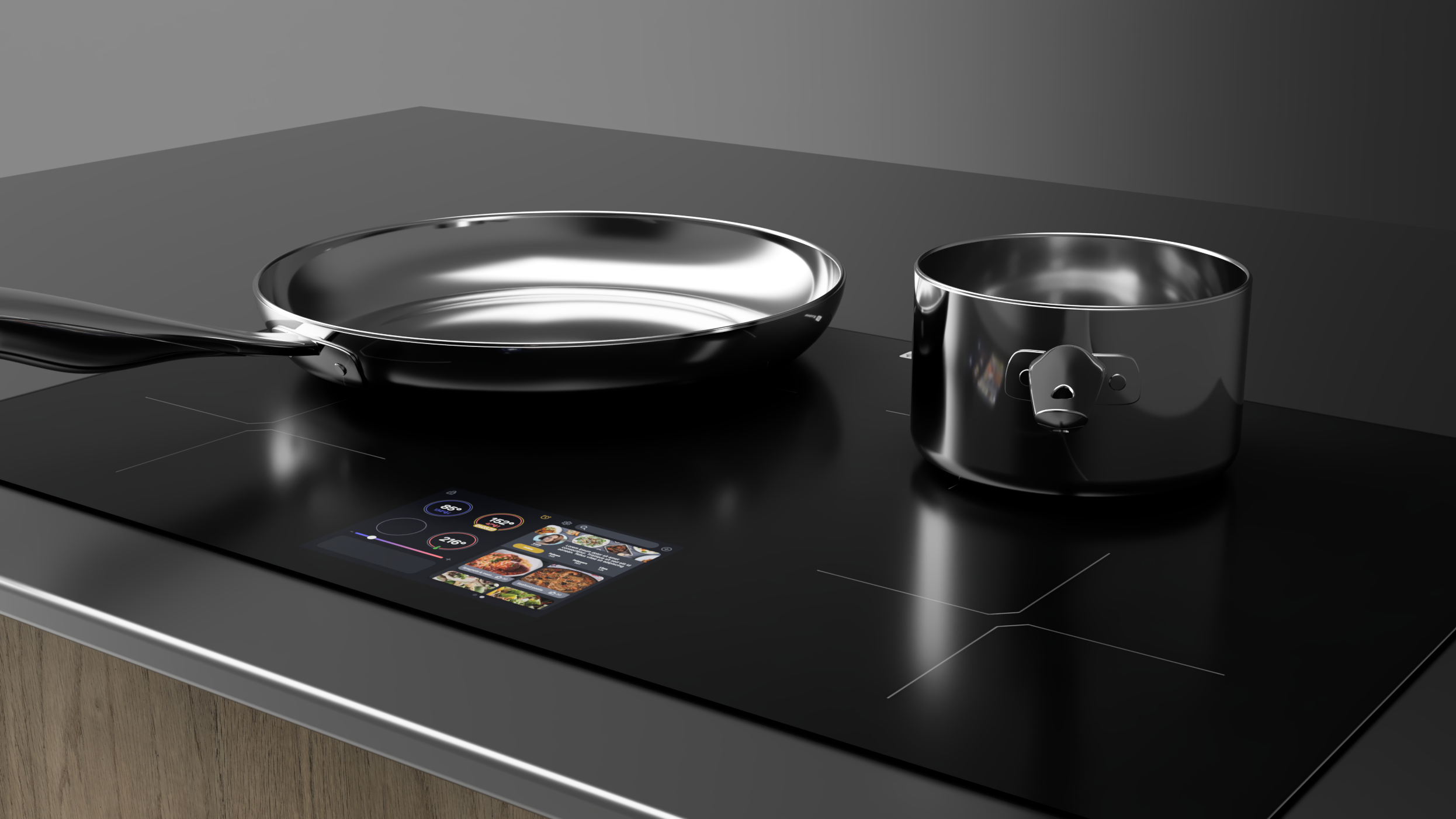
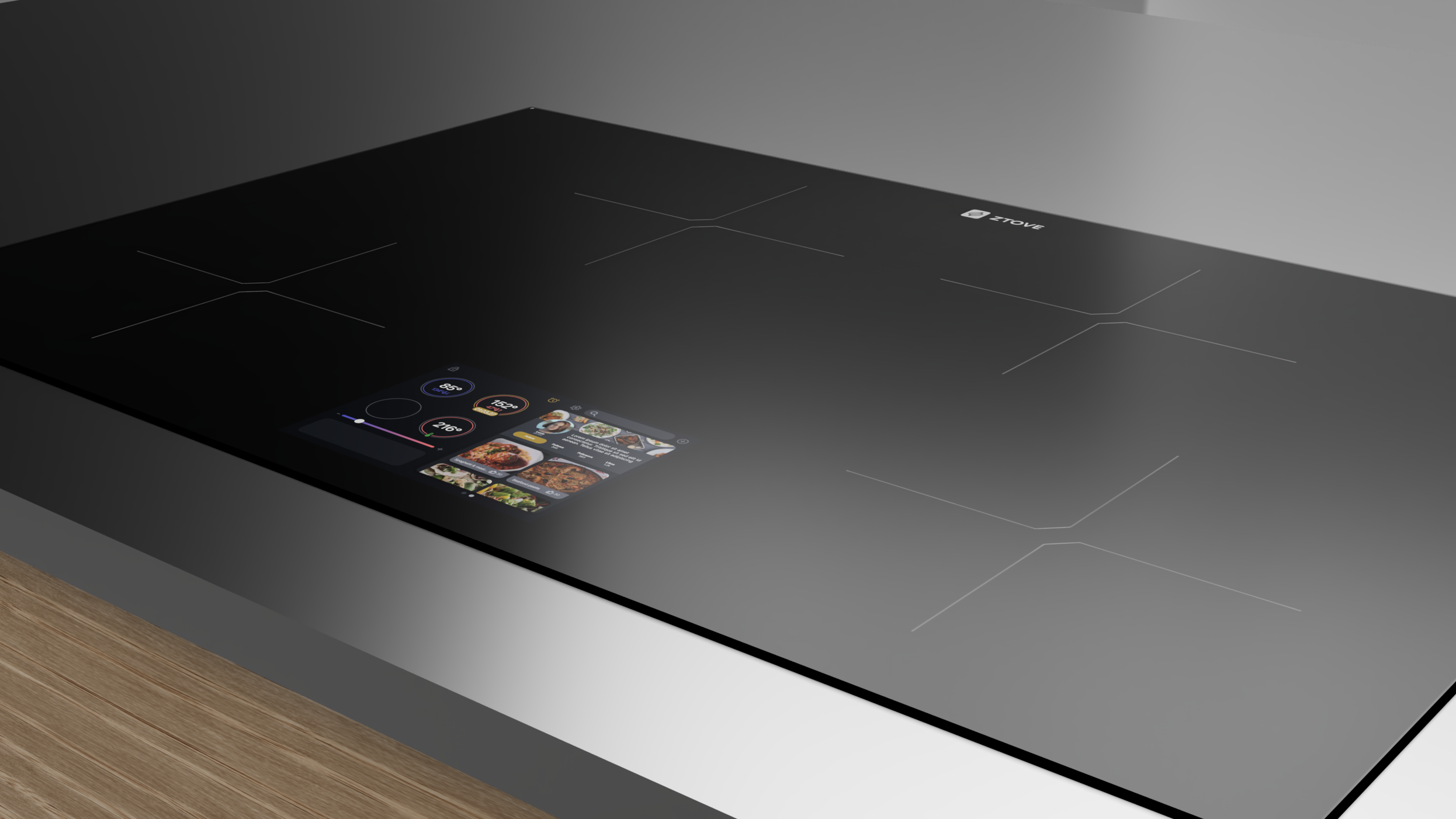
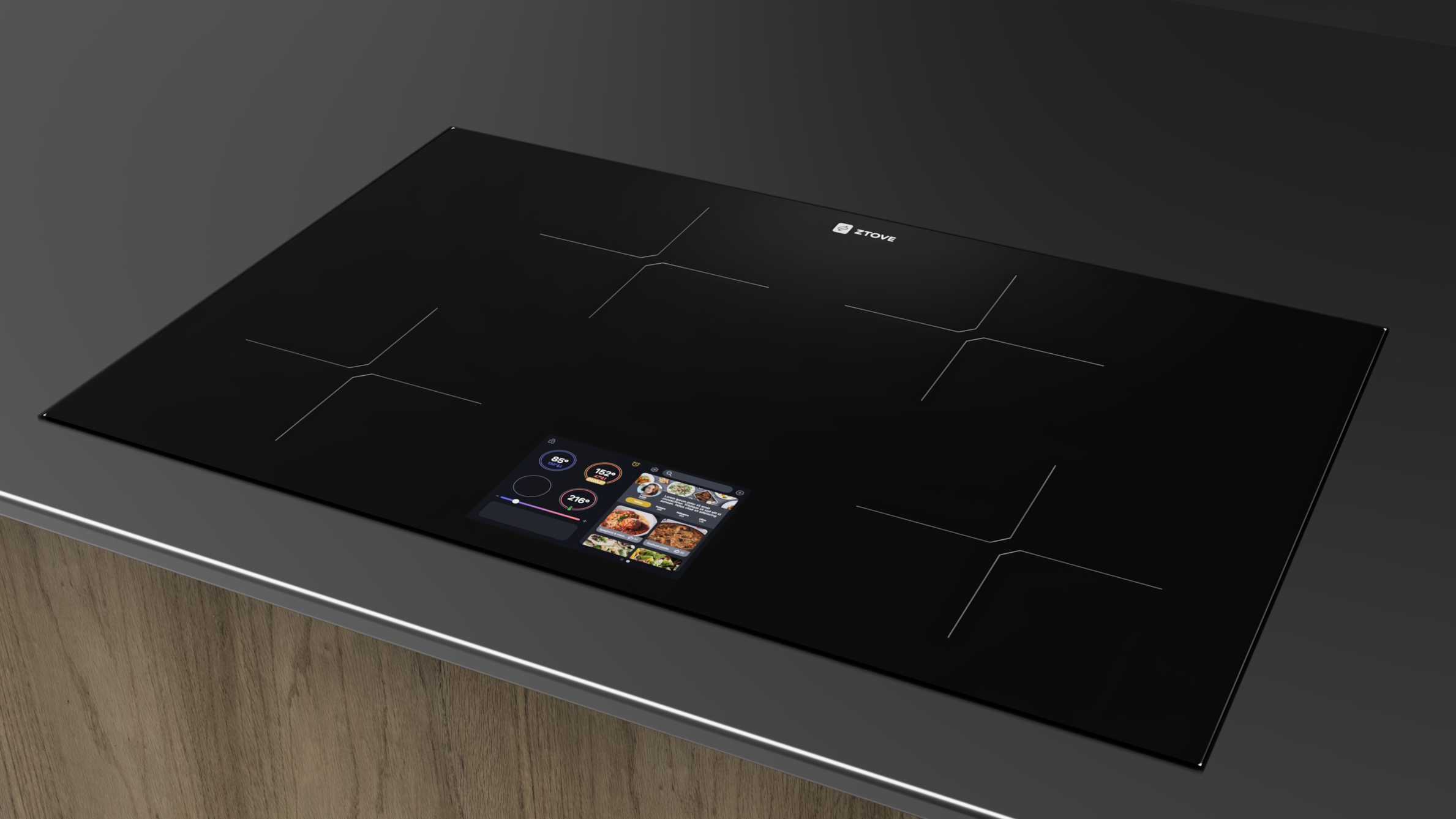
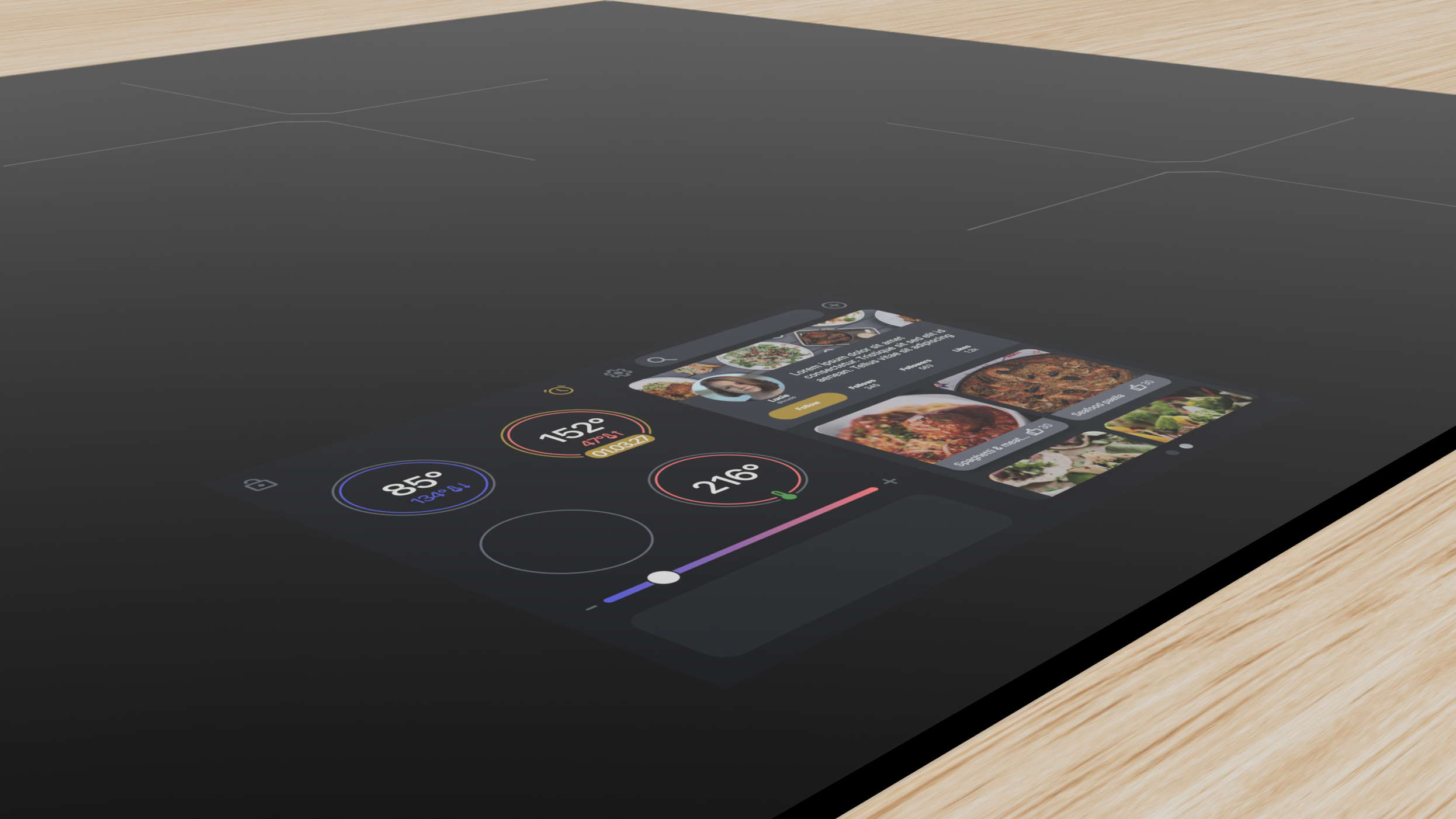
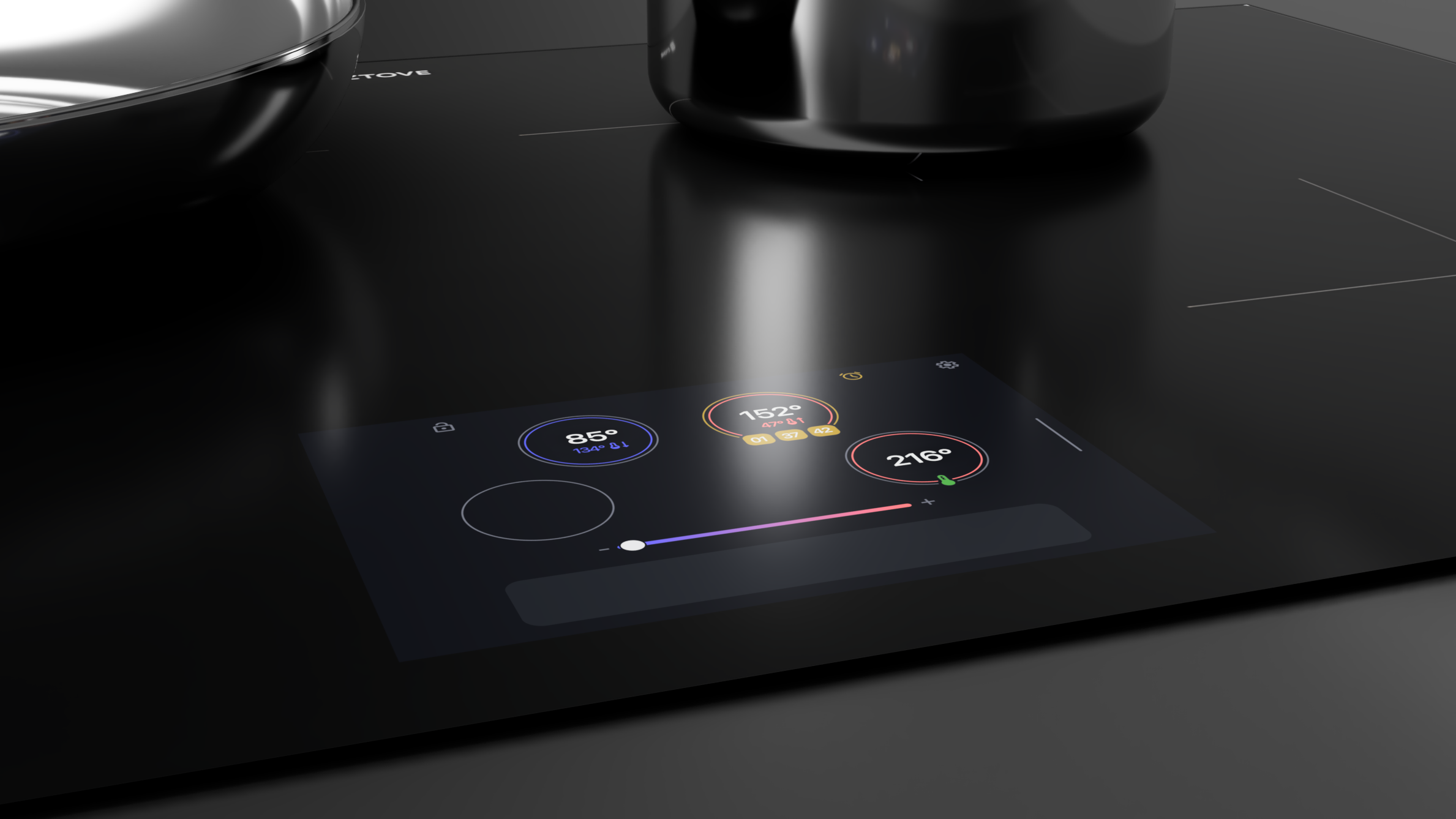
A redesign of Ztove’s smart cooktop interface. I designed a built-in touchscreen layout, prototyped the interaction flow in Figma, and created a 3D model of the cooktop to visualize how users could control heat and follow cooking steps directly on the stove.
Smart Cooktop
Year
2025





The process
Background
This project was carried out in collaboration with Ztove, a Danish company that develops smart induction stoves with precise temperature control. Despite the advanced capabilities, users often struggled with the dual-interface system—having to use both the stove’s built-in display and a mobile app. The goal was to explore new interaction possibilities that make cooking more intuitive and seamless.
Sketching idea
Based on observations, interviews, and participatory workshops, we sketched new interface concepts to simplify the user experience. A recurring insight was that users expected the stove’s display to be touch-responsive. We explored ways to integrate more functionality directly onto the stove, minimizing reliance on external devices.
Building a prototype
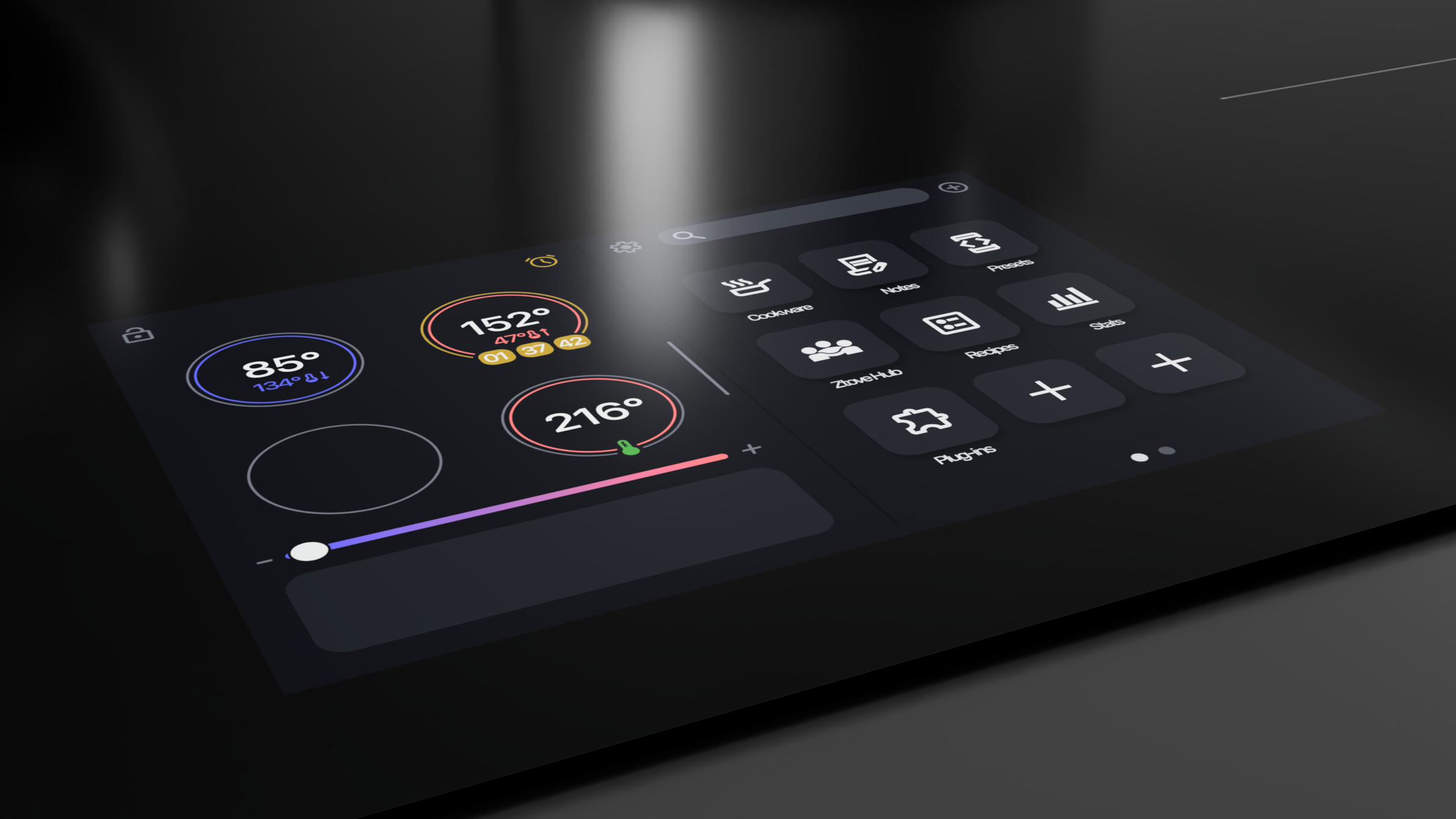
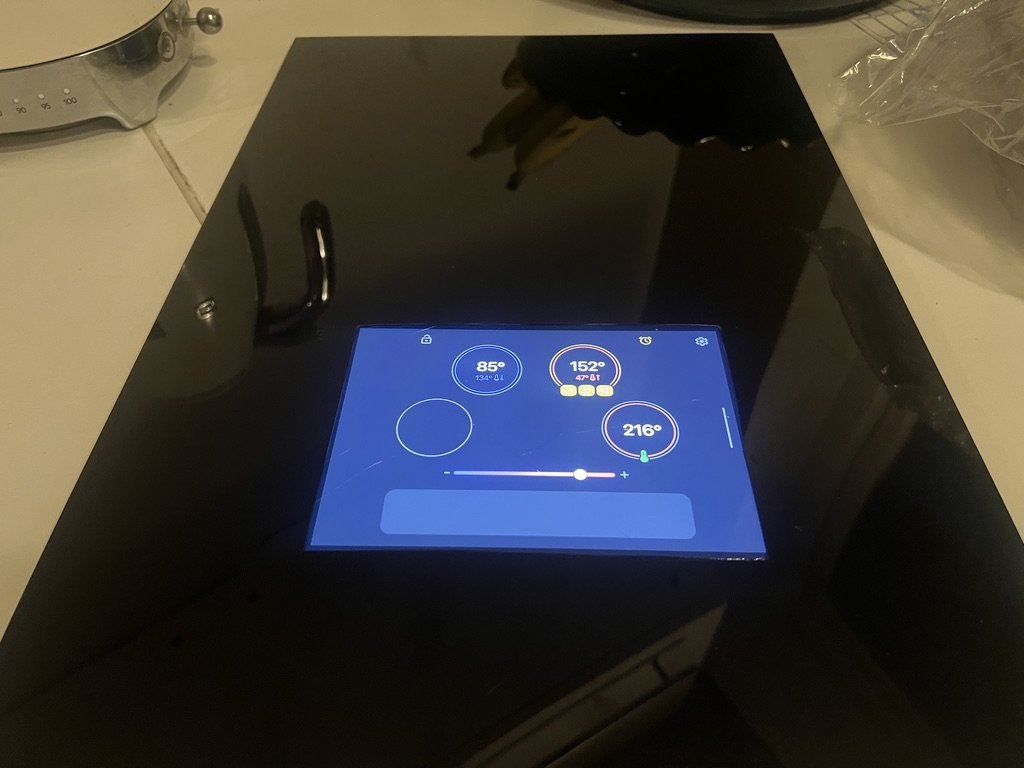
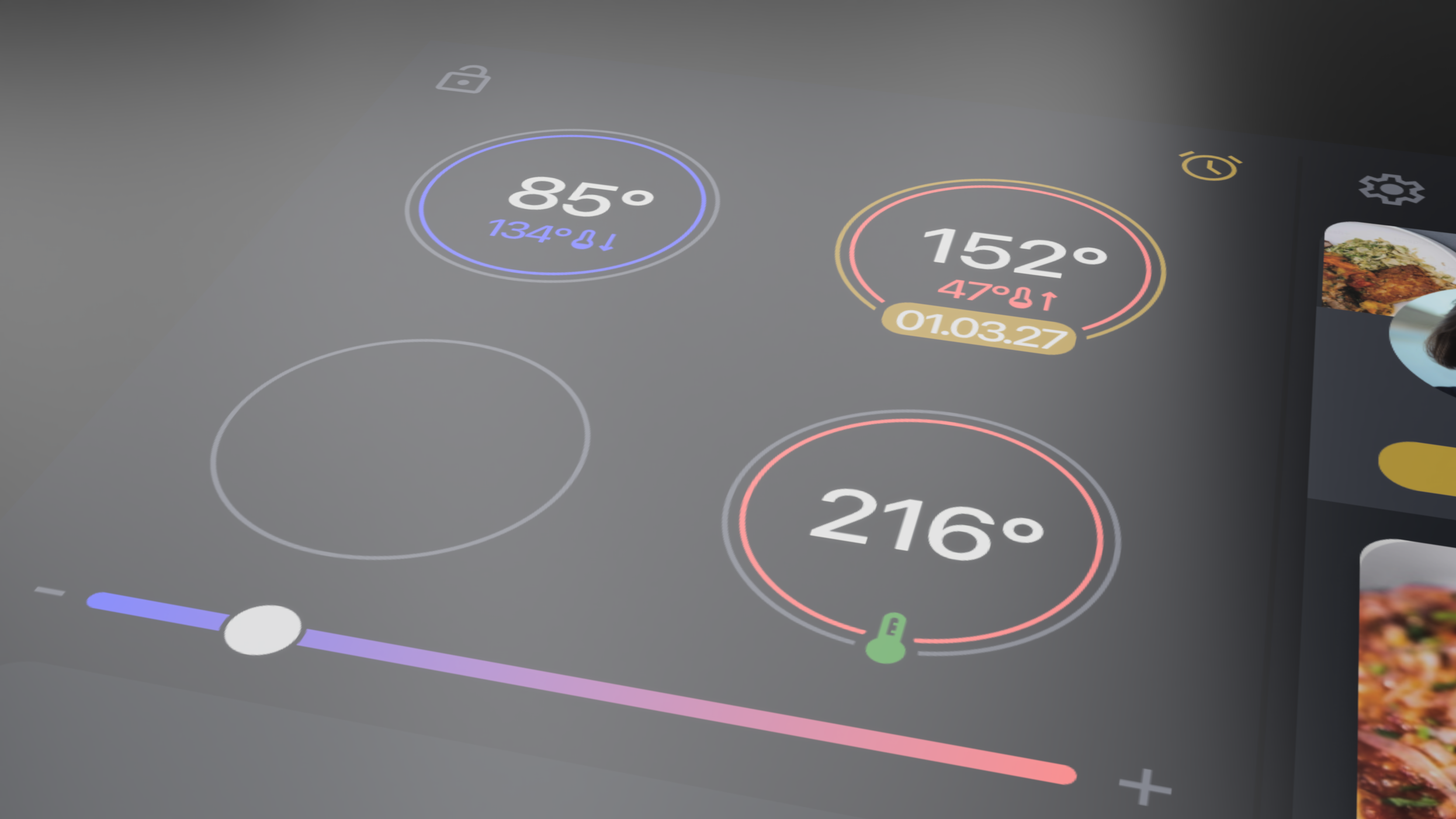
We developed an interactive prototype of a built-in touchscreen for the stove. This prototype made it possible to adjust temperature, follow step-by-step cooking programs, and receive visual cues—all without reaching for a phone. The interface layout was built around common user tasks like boiling, simmering, and timing
Testing the prototype
Tests were conducted in a cooking workshop setting. Users intuitively reached out to tap the stove’s screen, confirming the need for touch interaction. Feedback revealed that having the cooking steps and controls in the same place significantly reduced cognitive load and eliminated the confusion of “dual-screening.”

Making a 3D CAD model
To further develop the concept, we translated the touchscreen design into a 3D CAD model integrated on the stove surface. This helped visualize how the interface could be implemented physically and allowed for ergonomic assessment, ensuring interaction while cooking felt natural and safe.

The next step is to refine the visual design of the display, explore user segmentation for different types of cooks, and validate the concept with a high-fidelity prototype. The long-term vision is to create a user-friendly, smart stove experience that bridges technology with everyday cooking habits in a more intuitive and embodied way